Gas Sampling Applications with AutoSampler8
The AutoSampler8 can be configured for different gas sampling workflows. Using the same core system, it can support three main applications:
- Tree or chamber gas sampling
- Gas bubble collection from water
- Multi-point gas monitoring from field chambers
Together, these cover both discrete gas sample collection and continuous gas routing to an analyser.
1. Tree or Chamber Gas Sampling
Automated Gas Sampling from Enclosed Chambers

This application is designed for collecting gas samples from a closed or semi-closed chamber, for example a chamber mounted on a tree stem, soil surface, sediment core, or incubation setup.
The collection chamber first equilibrates with the gas environment of interest. At a defined time or trigger event, the AutoSampler8 draws gas from the chamber and transfers it into one of several sample containers. After sampling, the system can flush the chamber and tubing with CO2-free air or another reference gas to reset the system before the next sampling cycle.
Typical use cases
Tree stem greenhouse gas emissions
Soil chamber gas sampling
Sediment incubation chambers
Closed chamber flux measurements
Repeated sampling from one fixed chamber
Key benefits
Automated chamber sampling without constant supervision
Repeatable sampling intervals
Reduced manual handling and contamination risk
Suitable for temporal gas flux studies
Multiple samples from the same chamber over time
2. Gas Bubble Collection
Automated Collection of Gas Bubbles from Water and Sediments

Gas ebullition occurs when gas bubbles form in water or sediment and rise upward. These bubble release events can be steady, irregular, or sudden, which makes them difficult to capture manually.
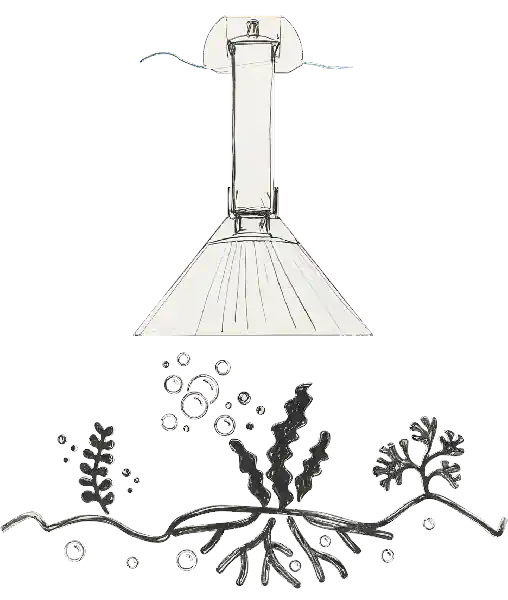
In BubbleCatcher mode, the AutoSampler8 collects rising gas bubbles in an underwater funnel and collection tube. Once enough gas has accumulated, the system transfers the gas sample into a sample container. After sampling, the collection chamber is emptied to atmosphere so the system is ready for the next bubble accumulation event.
Typical use cases
Methane ebullition from lake or wetland sediments
Gas release from reservoirs, ponds, and streams
Sediment core or mesocosm bubble collection
Event-based gas sampling after sudden releases
Long-term autonomous ebullition monitoring
Key benefits
Volume-triggered gas sampling
Captures sudden ebullition events
High temporal resolution of bubble release
Autonomous operation in the field
Reliable gas samples for later lab analysis
3. Multi-Point Gas Monitoring
Sequential Gas Routing from Multiple Chambers to One Gas Analyser

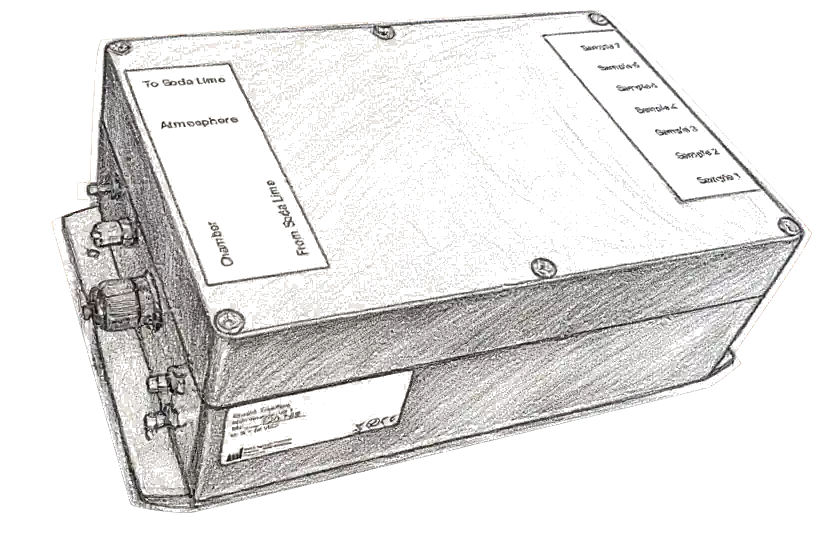
In this configuration, the AutoSampler8 is used not as a sample collector, but as an automated gas multiplexer. Multiple field chambers are connected to the 8-port valve. The system sequentially selects one chamber at a time and routes gas from that chamber to a connected gas analyser, such as a greenhouse gas analyser or gas chromatograph.
A second valve can switch between chamber gas and a reference gas, such as zero air or a standard gas. This allows baseline checks, calibration routines, or purge steps between chamber measurements. For this application, the peristaltic pump is usually not required, because the gas analyser or external flow system can draw the gas directly.
Typical use cases
Multi-chamber greenhouse gas monitoring
Sequential chamber measurements in field plots
Connection of several incubation chambers to one analyser
Automated reference gas or zero gas checks
Long-term unattended gas analyser operation
Key benefits
Connects up to eight chambers to one analyser
Reduces the need for multiple analysers
Automated chamber switching
Supports reference gas and calibration routines
Ideal for continuous or semi-continuous field monitoring